Fiber vs. Cable Internet: Which Is Better for Your Home?
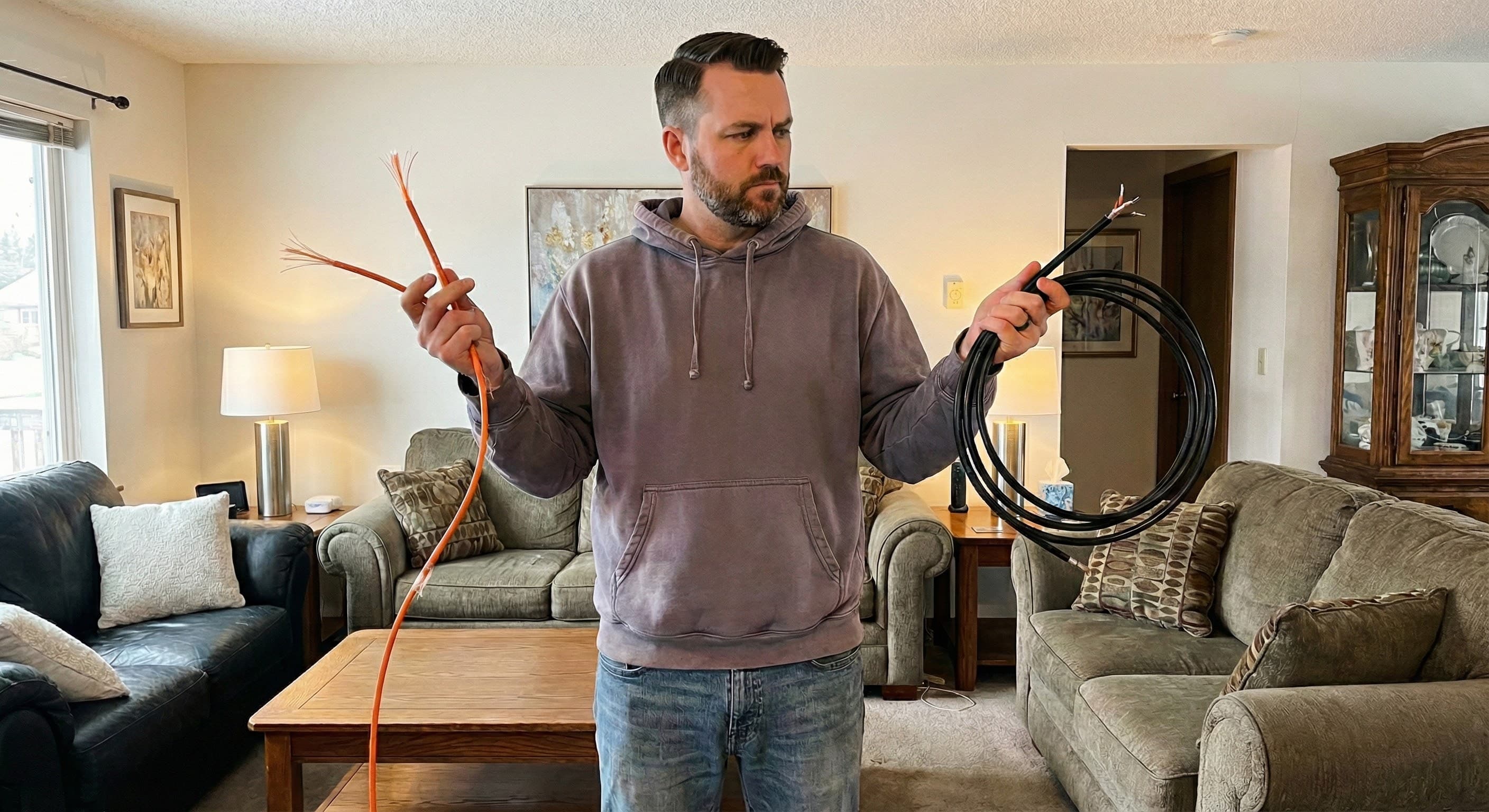
If you're comparing home internet options, you've likely narrowed it down to two main choices: fiber internet and cable internet. Both can deliver fast, reliable service — but they use different technology, perform differently under load, and may be priced differently depending on where you live.
This guide breaks down the key differences between fiber and cable internet so you can choose the option that fits your household's actual needs.
What's the Difference Between Fiber and Cable Internet?
The core difference comes down to how data travels to your home.
Cable internet runs over coaxial cables — the same copper-based lines used for cable TV. These networks have been in place for decades, which is why cable internet is available to roughly 90% of U.S. households. Data travels as electrical signals through the cable, and a modem converts those signals into your home internet connection.
Fiber internet uses thin strands of glass or plastic to transmit data as pulses of light. Because light carries more data faster than electrical signals, fiber networks can handle significantly higher speeds and heavier usage. Fiber infrastructure is newer, so availability is still expanding — currently reaching around 50% of U.S. homes — but where it's offered, fiber typically outperforms cable.
What About Satellite and Fixed Wireless?
You may also see satellite internet (Starlink, HughesNet) or fixed wireless (T-Mobile Home Internet, Verizon 5G Home) advertised as alternatives. These can be useful when wired options aren't available — but they come with tradeoffs in speed consistency, latency, and reliability that make them harder to recommend over fiber or cable.
If you have access to fiber or cable, those wired connections will almost always perform better.
Fiber vs. Cable: Speed Comparison
Both fiber and cable internet can deliver fast download speeds. Cable plans commonly range from 100 to 500 Mbps, with some providers offering up to 1 Gbps. Fiber plans typically start around 300 Mbps and can reach 2 Gbps or higher in some markets.
Not sure how much speed your household needs? Our guide on choosing the right internet speed breaks down what different activities require and which tier makes sense for your situation.
Beyond raw download speed, two factors affect everyday performance:
Upload Speed
This is where fiber has a clear advantage. Cable connections are asymmetric — download speeds are much faster than upload speeds. A 300 Mbps cable plan might only include 10–20 Mbps upload. Fiber connections are often symmetric, delivering the same speed in both directions.
If you work from home, join video calls, livestream, back up files to the cloud, or have multiple people using the internet at once, upload speed directly affects your experience.
Speed Consistency
Cable internet users share bandwidth with nearby households on the same network node. During peak evening hours, speeds can slow noticeably. Fiber is less prone to this congestion — the speed you're paying for is typically closer to what you actually get.
Reliability and Latency: How Fiber and Cable Compare
Latency — the delay between an action and the network's response — tends to be lower on fiber. For everyday browsing and streaming, the difference is minimal. But for online gaming, video conferencing, and real-time collaboration tools, lower latency means a smoother, more responsive experience.
Reliability also favors fiber. Coaxial cables can pick up electromagnetic interference and may degrade over time. Fiber optic lines aren't affected by interference and generally require less maintenance, which can mean fewer service interruptions.
Cable internet has improved considerably and serves most households well. But when both options are available, fiber is typically the more reliable choice.
Fiber vs. Cable Internet Pricing
Fiber internet is often priced competitively with cable — and in many cases, it costs less for comparable speeds. Entry-level plans for either technology typically fall between $30 and $50 per month. Gigabit service generally runs $60 to $100 monthly, though fiber providers competing for market share frequently undercut cable on price.
A few pricing details to keep in mind:
- Promotional rates are standard for both fiber and cable. The advertised price is often an introductory rate for 12 or 24 months. Check what the regular rate will be afterward.
- Equipment fees vary by provider. Some include a modem or router; others charge $10–15 per month for equipment rental. With cable, you can often purchase a compatible modem. Fiber equipment is more specialized, but many fiber providers include it at no extra cost.
- Installation fees differ as well. Fiber installation is often free during promotions, though new construction or newly wired areas may involve additional costs.
Because pricing varies by address, the best way to compare is to check what's actually available where you live.
Compare plans with RateMapper
See what you could be saving
RateMapper shows you every internet plan available at your address — with real pricing, features, and speeds. Best of all, it's totally free.
Is Fiber or Cable Internet Better for Your Home?
Choose fiber internet if:
- It's available at your address
- You work from home or take video calls regularly
- Multiple people in your household stream, game, or use the internet simultaneously
- You want consistent speeds during peak hours
- Upload speed matters for your daily usage
Choose cable internet if:
- Fiber isn't available where you live
- A cable plan offers better value for your specific needs
- You prefer using your own modem to reduce equipment costs
For most households where both options exist, fiber is the stronger choice — it offers faster uploads, lower latency, and more consistent performance, often at a similar or lower price.
The Bottom Line
If fiber internet is available at your address, it's usually the better option. You'll get faster upload speeds, lower latency, more reliable performance, and competitive pricing. Cable remains a solid choice when fiber isn't available — but for households with access to both, fiber is the stronger technology at a similar cost.
The right choice depends on what's actually available where you live.